
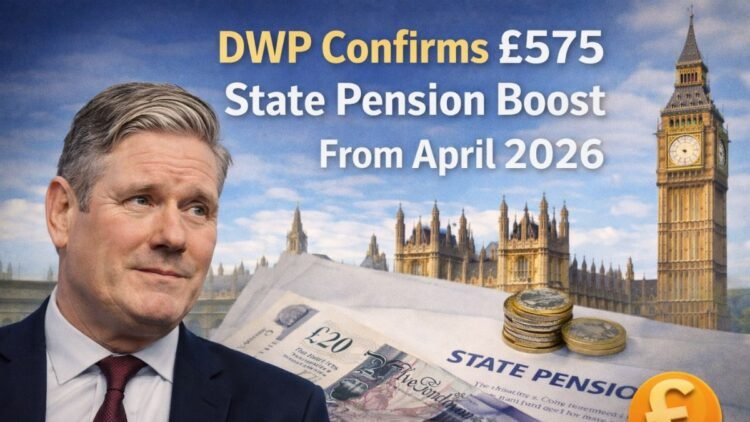
The Department for Work and Pensions (DWP) has confirmed a £575 increase to the new state pension as part of the Labour Party’s Spring Statement. Starting in April 2026, the new pension will rise by 4.8% under the triple lock mechanism, bringing the maximum annual entitlement to £12,548, or £241.30 per week.
This increase applies to individuals who qualify for the full new state pension, meaning those with 35 qualifying years of National Insurance contributions. The boost will provide a total annual increase of £574.60 for recipients at the full rate, delivering a welcome relief amid ongoing concerns about the cost of living.
Payment Dates for State Pension in 2026
The DWP has confirmed the following payment dates for the 2026/27 financial year, allowing pensioners to plan accordingly:
| Payment Month | Payment Date | Weekly Payment (£) | Annual Maximum (£) |
|---|---|---|---|
| April 2026 | 7 April | 241.30 | 12,548 |
| May 2026 | 7 May | 241.30 | 12,548 |
| June 2026 | 5 June | 241.30 | 12,548 |
| July 2026 | 7 July | 241.30 | 12,548 |
| August 2026 | 7 August | 241.30 | 12,548 |
| September 2026 | 7 September | 241.30 | 12,548 |
| October 2026 | 7 October | 241.30 | 12,548 |
| November 2026 | 6 November | 241.30 | 12,548 |
| December 2026 | 7 December | 241.30 | 12,548 |
| January 2027 | 7 January | 241.30 | 12,548 |
| February 2027 | 6 February | 241.30 | 12,548 |
| March 2027 | 6 March | 241.30 | 12,548 |
The government has emphasized that these increases are part of a commitment to protect pensioners’ income and ensure that the triple lock mechanism—which guarantees the higher of inflation, average earnings growth, or 2.5%—continues to support retirees.
Economic Context and Challenges
Despite the pension increase, experts warn that economic pressures remain high. Ben Harrison, Director of the Work Foundation at Lancaster University, noted that progress in improving the standard of living remains slow.
The Office for Budget Responsibility (OBR) forecasts that the UK economy will face challenges in 2026:
- Growth revised down to 1.1%
- Unemployment has not yet peaked
- Inflation expected to return to target only by year-end
- Potential economic impacts from escalating conflict in the Middle East
Nearly nine in ten UK residents report that the cost-of-living crisis continues to be a major concern. This context underlines the importance of the pension boost while also highlighting the need for wider economic support, particularly for young people seeking secure employment.
Youth Employment and Government Initiatives
The Chancellor has promised further announcements to address high youth unemployment levels. Experts suggest that the Youth Guarantee should be strengthened:
- Eligibility should expand to 22–24-year-olds
- The scheme should begin sooner than 18 months of unemployment
- Placements must offer secure, well-paid jobs and opportunities for long-term career progression
These measures are intended to complement the pension increase by supporting broader economic stability and assisting younger generations in navigating a challenging labor market.
The £575 state pension boost represents a significant improvement for retirees, helping to protect income amid inflation and cost-of-living pressures. Combined with broader economic reforms and youth employment initiatives, the government aims to balance financial security for pensioners with efforts to address national economic challenges.
FAQs
How much will the new state pension increase in 2026?
The pension will rise by 4.8%, providing an additional £574.60 per year for those receiving the full new state pension.
When will pension payments be made in 2026?
Payments are scheduled monthly, with the first payment on 7 April 2026 and subsequent payments following the dates listed in the payment table.
Who qualifies for the full new state pension?
Individuals with 35 qualifying years of National Insurance contributions are eligible for the maximum entitlement of £12,548 annually.