
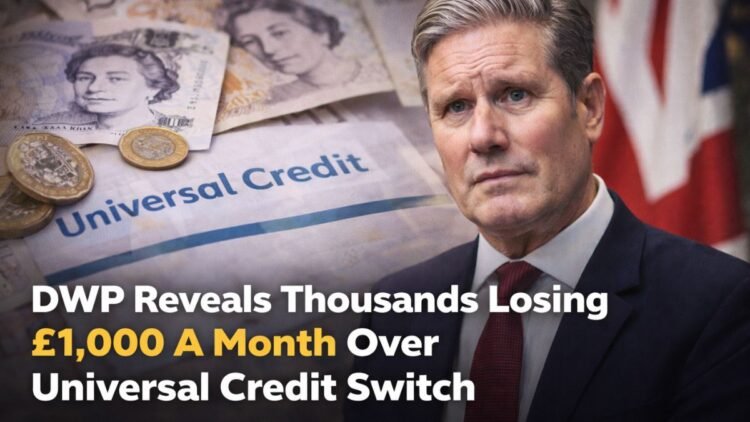
The UK’s Department for Work and Pensions (DWP) has released concerning data showing **hundreds of thousands of households lost significant income — averaging more than £1,000 a month — after failing to switch from older benefit systems to Universal Credit (UC).
As the government completes its managed migration of legacy benefits into Universal Credit, many claimants have unintentionally exited the welfare system or lost out financially.
Here’s a detailed, up-to-date breakdown of what’s happening, who’s affected, the eligibility requirements, payment timelines, and key facts and figures you need to know in early 2026.
Universal Credit Migration: Key Facts at a Glance
| Statistic / Metric | Data & Impact |
|---|---|
| Households losing benefits | 356,521 due to failure to claim UC |
| Estimated monthly loss | £1,000+ per household |
| Legacy benefits ended | Includes older means-tested benefits |
| Universal Credit rollout | Managed migration nearing completion |
| Deadline for migration notices | End of 2025 for most claimants |
What This Means
DWP administrative data shows that 356,521 households had their legacy benefits closed because they did not successfully claim Universal Credit after receiving a migration notice. As a result, these households lost support worth more than £1,000 a month on average, pushing many into severe financial difficulty.
What Is Universal Credit and Managed Migration?
Universal Credit (UC) is the UK’s main working-age benefit, designed to simplify the welfare system by replacing six older “legacy” benefits, including:
- Income-based Jobseeker’s Allowance (JSA)
- Income-related Employment and Support Allowance (ESA)
- Income Support
- Working Tax Credit
- Child Tax Credit
- Housing Benefit
Under managed migration, the DWP has been writing to millions of households still on these older benefits, instructing them to claim UC by a set deadline or risk losing all their support. Households that fail to respond or complete a UC claim can see their benefits stopped with no automatic transfer
Why Households Are Losing Out
1. Failure to Claim Universal Credit on Time
Many claimants missed the deadline after receiving their “migration notice.” If a UC claim isn’t submitted within the timeframe specified by DWP, legacy benefits are closed and no UC payment is made — leaving families without support.
2. Complexity of Transition
The switch requires claimants to:
- Set up a new UC account online
- Attend jobcentre appointments
- Submit information about income, savings, housing costs and household members
Some people struggle with paperwork, digital access, or understanding deadlines, leading to claim closure.
3. Lack of Transitional Protection or Awareness
Although some households are eligible for transitional protection (a temporary safety net to prevent immediate loss), many don’t claim it or weren’t aware they could. Missed deadlines still result in legacy benefit closures without protection, even when household circumstances haven’t changed.
Important Dates in 2026 and Beyond
| Date | Event / Deadline |
|---|---|
| End of 2025 | Majority of legacy benefit claimants should have received UC migration notices |
| Early 2026 | Data shows impact of migration emerging in benefits figures |
| Managed migration ongoing | DWP continues to support claimants transitioning into UC |
The official DWP timetable aimed to have all household migration notices sent out by the end of September 2025, with most households expected to complete the process by March 2026. While many have transitioned successfully, the loss of benefits by hundreds of thousands highlights challenges in the rollout.
Impact on Claimants’ Finances
Real-World Losses
Analysts estimate households that failed to migrate to UC have lost average monthly income of £1,000 or more, based on the value of multiple benefits that were stopped. These losses can include:
- Housing support previously received under legacy systems
- Tax credits and means-tested income support
- Additional allowances linked to family size or health needs
This abrupt drop in income has pushed many families into hardship, with rising living costs only compounding the problem.
DWP Support and Advice for Claimants
If you or someone you know risked losing benefits due to migration issues, the DWP recommends:
- Contacting the Universal Credit helpline immediately
- Visiting your local Jobcentre Plus office
- Seeking free advice from charities that assist with legacy benefit transition
- Checking online UC accounts regularly for messages or deadlines
Acting quickly can sometimes reverse a benefit closure or secure transitional protection.
The managed migration to Universal Credit is one of the biggest changes in the UK benefits system in years. While the aim is to streamline support and reduce complexity, the transition has left hundreds of thousands of households worse off, highlighting the need for clear communication, better claimant support, and careful handling of deadlines.
For anyone affected or still in the process of moving to Universal Credit, it’s crucial to act quickly, understand your rights and entitlements, and get the support needed to avoid income loss.
FAQs
Why did DWP stop legacy benefits for some households?
Because those households did not submit a Universal Credit claim by the deadline specified in their migration notice, so DWP closed their previous benefit awards.
How much money are households losing due to this issue?
The average estimated loss is £1,000 or more each month, depending on the combination of benefits previously received.
Can claimants appeal or restore lost benefits?
In many cases, yes — but claimants must contact DWP urgently to appeal or submit a late Universal Credit claim and explain the circumstances.