
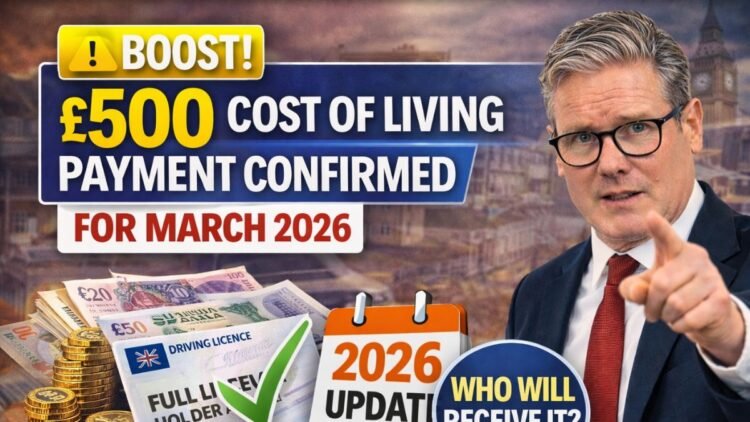
UK households struggling with rising living costs are set to receive a financial boost after confirmation of a £500 Cost of Living Payment scheduled for March 2026. The payment is designed to support families facing ongoing pressure from inflation, energy bills, and essential living expenses.
The government introduced this support as part of wider cost-of-living measures aimed at helping vulnerable households transition into the new financial year. For many families, pensioners, and benefit claimants, this one-off payment could provide essential financial relief.
Why the £500 Cost of Living Payment Is Being Introduced
Although inflation has slowed compared with previous years, many UK households are still feeling the effects of higher prices for food, energy, and everyday essentials. Rising council tax, water bills, and other annual increases often begin in April, which can place extra pressure on household budgets.
The March 2026 payment is intended to act as a financial bridge before these price rises take effect. By delivering direct cash support, the government aims to help millions of households avoid falling into debt while managing everyday expenses.
This payment follows earlier cost-of-living support packages introduced between 2022 and 2024, which helped low-income households cope with economic pressures.
Who Is Eligible for the £500 Payment?
Eligibility for the £500 Cost of Living Payment focuses primarily on people receiving means-tested benefits, although some additional households may also qualify depending on their income level.
Individuals who were receiving eligible benefits between 1 January 2026 and 28 February 2026 are expected to qualify for the payment.
Eligible Benefits
| Benefit Type | Eligibility Requirement |
|---|---|
| Universal Credit | Must be receiving payments during the qualifying period |
| Pension Credit | Pensioners receiving this benefit qualify |
| Income-based Jobseeker’s Allowance (JSA) | Eligible claimants qualify |
| Income-related Employment and Support Allowance (ESA) | Eligible claimants qualify |
| Income Support | Qualifying recipients included |
| Working Tax Credit | Eligible taxpayers qualify |
| Child Tax Credit | Eligible families qualify |
The majority of recipients will come from Universal Credit households, but pensioners and disabled individuals receiving qualifying benefits are also included.
Payment Dates for the £500 Cost of Living Support
The £500 payment will be issued automatically, meaning eligible recipients do not need to apply.
The payment is expected to be deposited directly into the same bank account where claimants normally receive their benefits or tax credits.
Expected Payment Timeline
| Payment Stage | Date |
|---|---|
| Qualifying period | 1 January – 28 February 2026 |
| Payment rollout begins | Second week of March 2026 |
| Majority of payments issued | Mid–March to late March 2026 |
| Final payment window | By 31 March 2026 |
On bank statements, the payment may appear with references such as:
- DWP COL
- HMRC COL
These labels indicate a Cost of Living payment from the Department for Work and Pensions or HMRC.
Will the £500 Payment Affect Other Benefits?
One major advantage of this support payment is that it is tax-free and does not affect other benefits.
The government confirmed that the £500 payment:
- Will not count as taxable income
- Will not reduce other benefits
- Will not affect the benefit cap
- Will not impact Housing Benefit or Council Tax Support
This means recipients will receive the full £500 payment without deductions.
Support for Pensioners and Vulnerable Households
Pensioners receiving Pension Credit are among the priority groups for this support. Many older residents rely on fixed incomes, making them particularly vulnerable to rising living costs.
For pensioner households, the £500 payment could represent several weeks’ worth of additional income, helping cover energy bills, groceries, or essential household costs.
Local councils will also continue to provide support through the Household Support Fund, which offers emergency help such as food vouchers or grants for households facing financial hardship.
What to Do If You Don’t Receive the Payment
Although the process is automatic, some claimants may need to take action if they do not receive their payment.
If the payment has not arrived by early April 2026, individuals should:
- Check their bank statement for the DWP COL or HMRC COL reference.
- Confirm they received eligible benefits during the qualifying period.
- Report a missing payment through the official government portal.
In most cases, delays occur due to bank processing times or benefit record updates.
How Households Can Use the £500 Payment
Financial experts suggest using the payment strategically. Some practical ways households may use the money include:
- Paying off high-interest debt
- Covering energy or utility bills
- Building a small emergency savings buffer
- Purchasing essential groceries or household supplies
Even a one-time payment like this can help households regain short-term financial stability.
FAQs
Who will receive the £500 Cost of Living Payment in March 2026?
People receiving qualifying benefits such as Universal Credit, Pension Credit, ESA, JSA, Income Support, or Tax Credits during the eligibility period.
Do I need to apply for the £500 payment?
No. The payment will be issued automatically to eligible recipients.
When will the payment arrive?
Most payments are expected between mid-March and 31 March 2026.